The Gulf of Nicoya is one of the most important marine ecosystems on Costa Rica’s Pacific coast. Its protected waters, islands, mangroves, and nutrient-rich environment support an incredible diversity of wildlife throughout the year.
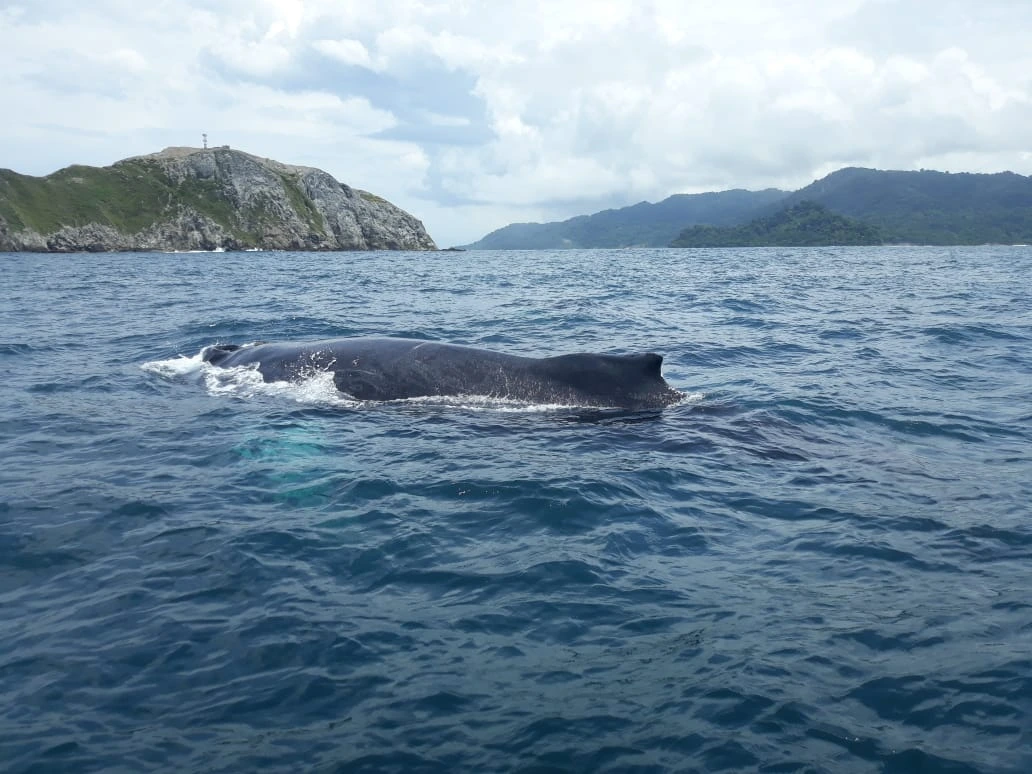
Among its most remarkable visitors are humpback whales and several species of dolphins, making the gulf one of the best places on the Nicoya Peninsula to experience marine wildlife in its natural habitat.
Every encounter is different. Some days you’ll witness a whale breaching in the distance, while on others a curious pod of dolphins may swim alongside the boat. That unpredictability is part of what makes every tour special.
Why Do Whales Come to Costa Rica?
One of the most fascinating facts about Costa Rica is that humpback whales arrive from two different hemispheres every year.
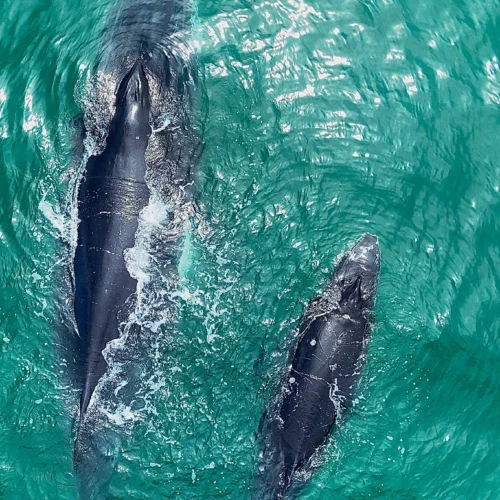
These whales spend months feeding in cold, nutrient-rich waters before making one of the longest migrations of any mammal on Earth. They travel thousands of kilometers to reach Costa Rica’s warm tropical waters, where they mate, give birth, and nurse their calves.
Unlike polar waters, Costa Rica provides a calm and safe environment for newborn whales during the first weeks of life.
Two Whale Seasons in Costa Rica
Costa Rica is one of the few places in the world where humpback whales can be seen during two different migration seasons.
Southern Hemisphere Migration
Whales traveling from Antarctica and southern Chile usually arrive between late July and November, with August and September generally offering the highest number of sightings.
This is the most active whale season in the Gulf of Nicoya.
Northern Hemisphere Migration
A second population arrives from the North Pacific between December and March. Although sightings are usually less frequent than during the southern migration, visitors still have an excellent opportunity to observe these incredible animals.
This double migration makes Costa Rica one of the few countries where whale watching is possible during much of the year.
Responsible Whale Watching
Watching whales and dolphins is an unforgettable experience, but it also comes with responsibility.
At Pochote Ocean Adventures, we believe that wildlife should always be observed with respect.
During our tours we follow responsible practices such as:
Maintaining safe observation distances.
Avoiding sudden changes in speed or direction.
Never chasing or surrounding marine mammals.
Giving mothers and calves additional space.
Limiting observation time when appropriate.
Our goal is to provide incredible experiences while minimizing our impact on the animals.
Frequently Asked Questions
Can whale sightings be guaranteed?
No.
Whales are completely wild animals that move freely throughout the Pacific Ocean. Although we operate during the best seasons and in areas where sightings are common, nature is always unpredictable.
What is the best month for whale watching?
Generally, August and September offer the highest probability of humpback whale sightings in the Gulf of Nicoya.
Are whale watching tours suitable for children?
Absolutely.
Families often enjoy whale watching together, and children are usually fascinated by seeing these magnificent animals in the wild.
How close can the boat get?
Our captain always follows responsible wildlife viewing practices. The well-being of the animals comes before getting the closest possible view.
An Experience You’ll Never Forget
Seeing a humpback whale surface just a few hundred meters away or watching dolphins swim alongside the boat is something that stays with you long after your vacation ends.
These encounters remind us how extraordinary the ocean truly is and why protecting it is so important.
At Pochote Ocean Adventures, we are proud to share these incredible moments while promoting responsible tourism and respect for marine wildlife.
We invite you to experience the magic of the Gulf of Nicoya and discover one of Costa Rica’s most unforgettable wildlife experiences.
Did You Know?
A humpback whale can travel more than 8,000 kilometers (5,000 miles) during its annual migration. Some individuals that visit Costa Rica have journeyed all the way from Antarctic feeding grounds, making this one of the longest migrations of any mammal on Earth